Sunday, September 23, 2012

Kingdom

So I just spent the five days last week in Saudi Arabia. I think that in the United States we often have decidedly mixed feelings about the Kingdom. On one hand, it is the ultimate boogieman. Wealthy beyond compare but home to mindblowingly restrictive religious laws, birthplace of Osama binLadin and the 9-11 hijackers, one of the last true unapologetic monarchies… But on the other hand, when push comes to shove in a rough neighborhood, they always seem to have our back. They could choke off the American economy in a heartbeat if they stopped the oil from flowing. When we wanted to sanction Iran, they increased production to make it possible. They hosted us for Iraq I. And they have the wealth to purchase enough weapons to reduce our regional best friend forever Israel to a bug smear on the Mediterranean Sea, but never have. So when you peak under the gutra, who are we really dealing with you here?

And after five days, largely confined to the Riyadh Intercontinental and various sterile office blocks, I have no idea. This is what I can report. As a female I am required to wear an abayah in public (which is basically a flowing black polyester choir robe), and cover my hair (more black polyester). Saudi men traditionally wear a white robe and head covering as well – though it is not mandated by law and foreign men can get away with suits. No long hair though. (As an illustration, I included these cute little clip art icons that I ripped off one of our powerpoints.)

 As a woman, I am not allowed to drive. I am not allowed to enter government buildings. (This made for an awkward moment in one meeting when we realized that I was the only one in the room with the technical skills to work on the computer portal with the necessary data – but culturally that wasn’t going to work. They made robot jokes. I smiled and silently swallowed a drone joke.) Office buildings – public or private – do not contain female rest rooms. In order to use the bathroom, we have to get a male colleague to “sweep” one for us then stand guard. I am not allowed to use the hotel gym or swimming pools (though when I asked, they did install an exercise bike in my cavernous hotel room). And these are just the restrictions on foreign women. Saudi women face much stricter limitations.

All of which would lead one to believe this would be a pretty chauvinist place to work right? But oddly once you are sitting across the table in a board room, despite the fact that I am just a little face peering out of a giant mass of black fabric, my government counterparts took as seriously, if not more so, than some of my Western hyper-liberal male World Bank colleagues in DC. In addition, all the meetings were conducted in English which our Saudi counterparts spoke flawlessly. They were intelligent, engaged, motivated, and completely open to discussing innovation. There wasn’t even one time where I even felt like slamming my head into the table – almost unheard of on my standard business trips. But on the other hand, all week I encountered only one Saudi woman at any of these conference tables, and she was nearly silent.

And professional interactions are really all I have for you. On the afternoon of my last day I was able to sneak out to one of the markets. It was allegedly the oldest covered market in Riyadh and in a distinctly different part of town than the gleaming skyscrapers. The market had a local section, where all the vendors were men but some of the shoppers were small groups of women. (One of the upsides of the abayah and hijab rules are that once I am covered up and wearing sunglasses, while no one is going to mistake me for a Saudi woman, I could be any number of respectable Balkan or Central Asian nationalities.) There was a tourist section that was basically filled with Pakistanis and Afghans selling crap from Pakistan and Afghanistan. I found a rug that would go great in my new living room – but the starting price was 23,000 euros. But I guess if I were ever going to find a prince to buy it for me, I was probably in the right spot. Alas…

So in the end, I don't have any definitive conclusions for you.  Further study is warranted.  But right now - I am just happy to be sitting in the United States of America on a Sunday afternoon - full of Salvadorean food and watching football.

Monday, September 17, 2012

Les enfants tortue

This story is an oldie but goodie.  For those of you that were reading way back in 2002, I told it before.  But  it is one of my favorites so we are going to do it again.  For Christmas 2002 a few of my fellow Burkina Peace Corps volunteers and I went down to Benin.  It was a wild trip, including a high speed donkey accident and lots of voodoo, but we eventually made it to the beach.  One morning while we were having a beer (come on - I was in my early 20s and on vacation - don't judge), two local guys came up to us and asked us for money to release "les enfants tortue" (the baby turtles), which my tipsy garbled French misheard as "les enfants tortures" (the tortured children).  And hilarity ensued.  


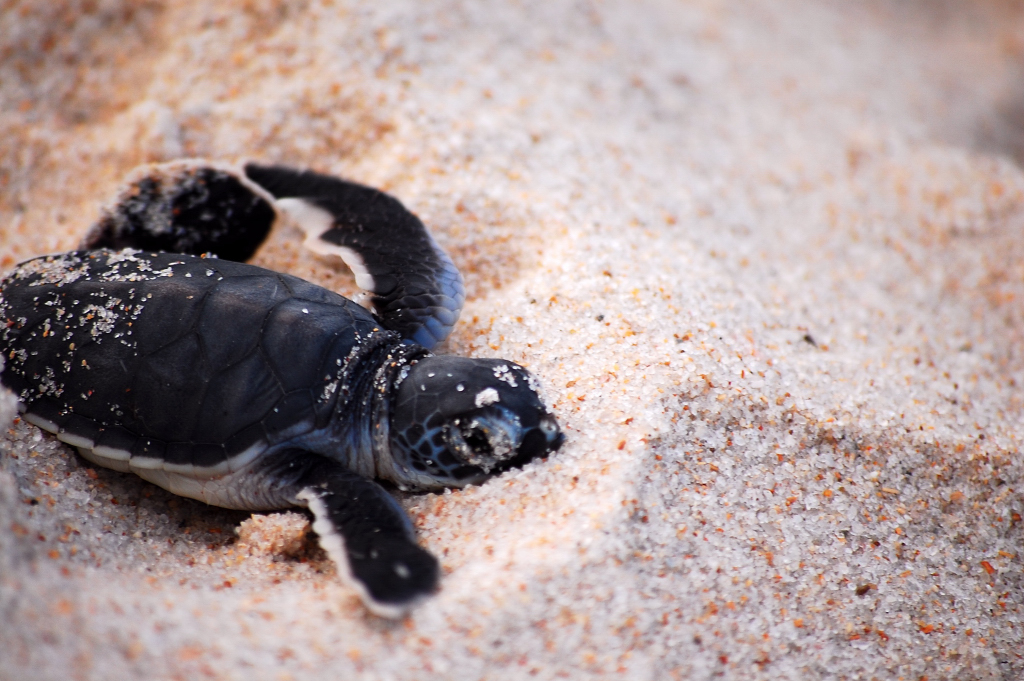
So that story goes with these pictures that I took this weekend.  To take a break from the three weeks that I had already spent on road and gear up for this week here in Saudi Arabia (which is a fascinating place that I will write about next week), I spent the weekend at a fancy little beach resort just south of Dar.  Sea turtles nest on the grounds, and while I was there one group hatched and made their way down to the waves and whatever life had in store for it.  I of course was there with a 200mm zoom to document the moment.  See below.


And on a sad note, this post is dedicated to Hilary Stevens.  She was one of the intrepid volunteers that made their way to Benin with me on this trip mentioned above.  She sadly lost her older brother, Ambassador Christopher Stevens, in Libya last week.  My heartfelt condolences to her and her family.


Tuesday, September 11, 2012

Shark Week


I was really hoping for pictures for this post.  (I have been waiting in vain hope for the last two weeks that one of my new friends from the liveaboard dive trip to share pictures, but alas.  I would have pictures myself but I learned the hard way about the dangers of submerging underwater cameras in salt water.  Note that I did this on the beach of course.)  So really by rights I shouldn’t have bothered to post this, as no one is really interested in someone else’s drinking, diving, and carrying-on stories if there aren’t a few photos to go with it – but unfortunately for all over you I have a joke that I really want to use at the start of an anxiously anticipated next blog post in two weeks – so you have to deal with this.  In summary, there were lots of sharks, a fair number of Caribbean lobster, lion fish, some really bad-ass deep water swim-throughs, and one exquisite spotted eagle ray.  Other things that I learned of note living with 24 strangers on a 69 foot sailboat in the outer islands of the Bahamas – that I am not very good at Texas-two-stepping, that the ritual of marine toilets grows old quickly, that the best place to get both get some sun and see the stars is lounging on the lifeboat, the safest way to prevent guests from tumbling down the mess ladder is by installing a tap on deck (though this is counterproductive when it comes to the sleeping quarters ladders), white sand beaches are always beautiful, iguanas cannot distinguish between grapes and purple-painted toe nails and much hilarity (for others) ensues, and the best way to cook raccoon is in a crock pot. 

Monday, July 09, 2012

Afar Away Again

It is appropriate that I spent a week this trip in eastern Ethiopia studying nomads.  After all, since I moved out of one apartment on May 31 and was not being able to move into my new one until June 29, I was at the time also nomadic.  (I call this the Pee Wee Herman “takes one to know one” school of economic development research.) 

But – as I mentioned in my December post after the first time I was out there – life on the margins in Afar isn’t pretty.  There were a couple of moments out there where I was just about as close to active ethnic conflict as I think I ever need to be.  The short version of the narrative goes like this: the Afar and the Issa (an ethnic group that we would call Somalis) have lived uncomfortably side-by-side for millennia.  Climate change, current drought, encroachment of industrial farming, and having well-mined borders haven’t really done much to improve relations.  Both groups have a tradition of livestock raiding – preferably from the other one.  (And people there love their camels.  Just think about how attached Americans get to dogs or horses, then consider an adult camel is the household’s main source of food, transportation, and savings.  In times of crisis – they can bring about 1200 USD at the market.  So if a single thing was this important to your livelihood, you would naturally insure it.  Insurance is a 75 USD payable to a Mr. Antov Klashnikov.)  


So they kill each other.  One side attacks, the other defends, men die, livestock changes hands.  In the village next where I was working, 12 people had been killed the night before in a failed raid.  Some of the households could not be interviewed because they were in mourning.  After we left that village, we tried another one, 7 people killed there the week before.  All the men had all left either with camels for safer territory or went to join the militia.  The situation got so tense after the second raid that the Ethiopian Federalis was called out.  The government brought hundreds of soldiers, truck mounted machine guns, and at least one tank.  It was not subtle.

At this point my Ethiopian counterparts assured me of two things: (1) now that the army was here the two sides would have to behave, and (2) I really didn’t need to worry anyway because it would be a major cultural faux pas for either side to shoot a woman.  While all that was well and good, I decided as the project manager that we were going south.  I told the driver to keep going until the density of soldiers thinned from “once every 500m” to “just the standard checkpoints.”  

And the south had the added benefit of amenities.  For the first time in days, we had both power and running water – occasionally even simultaneously.  The room was even equipped with a “Sunny” brand TV.  Flipping on the BBC, I heard about violence in 17 killed in Syria, 28 in Iraq, up to 9 in Afghanistan.  Nothing about Afar.  I asked my counterparts if it made the local Ethiopian news.  No, they said, that wasn’t news.  As long as they just stuck to killing each other and didn’t threaten the main shipping route to Djibouti – no one really cared.  And so it goes.


Other than that - the pilot was the usual assortment of pilot experiences (hot, tiring, exhilarating, hot, frustrating, ridiculous, hot, etc).  A bit of added stress in that I had along my new CoAuthor who had never been to Africa before.  And Afar is certainly not Africa-for-Beginners.  The desert provided a few new opportunities though.  We drove a few hundred miles north to the salt flats one afternoon.  Traditionally long caravans of camels would be used to transport salt blocks evaporated from mineral springs over the mountains.  These days long caravans of mechanically questionable trucks haul salt on what I have to admit is a pretty reasonable tarmac road.  And coming off the mountains onto the endless flat of the desert with the setting sun lighting up the rectangular evaporation pools into oranges and pinks – the sight was pretty spectacular – even if progress had emptied out my camel populations.


In what was also one of the more questionable decisions of the trip – we waded across the Awash River – twice.  The point of the pilot was to demonstrate to the future survey supervisors that all points are accessible.  It might take a pretty good walk in the blazing sun, but you can get there.  (There is statistics involved in why it is necessary to walk to these particular points but interested parties will have to wait for the paper to come out.)  Unfortunately for me, the road was on the wrong side of the river.  So we walked a good ways down the river to find the shallowest place to cross.  On the bank I was having serious second thoughts.  Visions of shistosemysis and river fluke danced in my head (despite the fact that these two are both microscopic – I assure you what my head conjured up were truly frightening.)  But – undaunted – in waded the local guide, then my Ethiopian government partners, then my Ethiopian counterpart.  The final straw was when CoAuthor hitched up her skirt and stepped in.  Son of a bitch – I have been working in Africa for 11 years – I am not going to let some newbie show me up.  So across I went too.  (Note: I grew up on the east coast.  What should be under water is rock – or occasionally if you are willing to sit in traffic for a few hours – sand.  I never got used to the squishy fresh water river bottom thing.  And this nature discomfort is multiplied by 1000 when that squishy river bottom is located in Extreme Rural Horn of Africa.)  But we got across with minimal damage, and then undertook a brutal 90 minute hike through the desert scrubland to my pilot point.  It was now midday and the sun was killer.  By the time we made it back to the river – the direct route this time – drinking water reserves were exhausted.  There was no hesitation about walking right in.  Or whipping off my headscarf, dunking it, and tying it into a decidedly non-pious but very cooling river-water turban.  When we eventually arrived back in town, I drank a two liter bottle of water.  By myself.  In less than 20 minutes.  

And that basically does it.  Pilot was in the end successful.  CoAuthor held up unbelievably well.  Project is ready for the implementation phase. 

I am going to close with two pictures that I really like that I didn't take - CoAuthor did.  Credit where credit is due - they definitely sum up the trip.  The first is the sheer joy of our young guide at arriving at the Awash River on the return crossing, and the second is a typical scene from the pilot.


Sunday, June 03, 2012

"India"

You shouldn’t lie to your mother.  I know this.  But – as all those of you that have ever been born know – they are kind of stress-cases once in awhile.  And – as those of you that have been reading this blog for awhile know – mine is particularly a bit of a stress case.  So I told her I was going to “India.” 

But try to imagine the conversation last month that would have preceded my departure – “Hi Mom.  Happy Mother’s Day.  Glad you like the lawn fountain from Katie and I.  By the way, I am going to Pakistan today.  Hope Dad takes you somewhere nice for dinner tonight.  Bye!” 

Pakistan is the big bad wolf these days.  If you believe the mainstream media – it is a country where they stop warring with India only long enough stage cross border raids on NATO troops in Afghanistan.  If you believe the right wing loons – it is a country where they offer tax breaks to rogue international terrorists to set up multi-wife compounds in major cities.  In any case – I wasn’t coming in with particularly high expectations for the week-long training course that I would be teaching in Islamabad. 

As it always is with these things, the truth was much more mundane.  Islamabad is a South Asian city with relative good infrastructure.  (I daresay it might even be efficient if it were for the security checkpoints and the check-the-trunk-mirror-the-underside routine done every time one enters any commercial or residential establishment.)  The people seemed very nice – hardworking bureaucrats who actually seemed interested in learning more about statistics – or at least nice enough to humor me for a few days.  It was hot – over 100 degrees every day.  Bit on the dusty side – but the developing world will get you with that one every time.  All in all – not really any different than anywhere else I work.

All this is with the caveat that I barely left the confines of the hotel / office carousel.  One day I went shopping – because I discovered that what looked conservative coming out of my closet in DC – didn’t look quite as conservative on the ground.  One night a fellow alum of my grad program snuck me out of the hotel to go to dinner.  (Okay – it wasn’t quite as cloak-and-dagger as all that – all I did was blend into the crowd leaving some function and get into his car.)  He showed me around the city a bit and we had tea on the mountain that borders the city.  Beautiful view to watch the rolling blackouts blink different neighborhoods on and off.  And much cooler. 

The only tense part of the whole trip was the departure.  The airport in Islamabad is a bit serious.  They take customs and immigration to a whole new level of scrutiny.  Plus my colleague was Indian American (dot not feather) – so we basically looked like a Bollywood star travelling with her faithful sidekick Casper the Friendly Ghost.  She cleared the first check point like a pro – but there was a great bit of discussion over my ticket.  (Note that all of this takes place at 3 am because the flight departs at convenient hour of 5:40 am.)  One guard looks at it for awhile.  Then he calls over another guard.  As the third guard arrives, I am beginning to get a bit nervous.  I know everything is in order, but had the situation been reversed (Pakistani in an American airport), I would have already been being swabbed for bomb making residue.  The third guard looks at my ticket, turns to the first two and says, “Vegetarian – no eating meat,” followed by an Urdu version of the explanation.  All three look at me like I’m seriously deranged and very possibly dangerous – and I slink off to immigration. 

Thus ends my adventure in Islamabad.  I have been told that real Pakistan begins 10 km outside the city, so I know that it might be a bit premature to give the country the thumbs up – but someone might want to call Fox News and suggest that they hire a fact-checker.  Someone might want to do that anyway.

P.S. Since I didn't do anything photo-worthy in Pakistan - I am attaching a pair of pictures from Istanbul - where I stopped for a day on the way back.  


Wednesday, April 25, 2012

Calypso Turtle


What do you need to know about St. Lucia as background for this post?  It is a country of 238 square miles, with approximately 174,000 people, two Nobel Laureates (the world’s highest population to laureate ratio), and the same voting power as China in the UN.  As far as geography – it lies between Martinique and St. Vincent in the Eastern Caribbean.  (The nearest large country is Venezuela.)
With its high percentage of package tour resorts and American honeymooners, it is probably not the first place I would choose to go on vacation, so how did I end up there last week?  The work plan gods smiled on me.  I got to spend a week teaching a course in data collection and survey statistics for representatives of the Organization of Eastern Caribbean States.  The upside of teaching in paradise is that you can knock off for a half day and scuba dive in gin-clear waters, hang out with the world’s friendliest sea turtle (seriously – this guy was more than happy just to chill in the current with us – compliments to my dive partner for the photographic evidence), stop on your way to the airport to see the famous twin peaks of the Titons and visit “the Caribbean’s only drive in volcano,” and basically have the ability to brush your teeth with rum punch if you so desire.   

The downside is that everyone else in paradise is on vacation.  Which means at 10 pm – when I am on a deadline trying to bust out the last batch of slides for the next day’s class – the drunk fools attempting to sing what may was equally likely to be Hotel California or La Bamba acappella because the hotel has *finally* unplugged the karaoke machine – really piss me off.  So I am out there on my balcony wanting to scream “get off my lawn you god damned kids” and shake a broom at them.  Unbelievably the quietest place I found to work in the village of Rodney Bay was the Whiskey in a Jar Irish pub.  

Other than that, not much in the way of adventures to report.  I am going to close this post with a joke though.  I don’t normally repeat silly jokes that they print in airplane magazines, but my grandmother would have liked this one.  (She used to love calypso music – listening to it in Florida during the winters.  The only song that I can remember had the chorus of “the girl is your sister but your mamma don’t know” – until the last verse – in which the chorus was “your papa ain’t your papa but your papa don’t know.”)

 In any case:
Donovan was on his deathbed and his wife Leila was at his bedside. She held his fragile hand,tears running down her face. Her praying roused him from his slumber. He looked up and his pale lips began to move slightly.
'Mih dahlin Leila,' he whispered.
'Hush mih love,' she said, 'Rest... Doh talk.'
He was insistent. 'Leila,' he said in his tired voice, 'Me have someting me hafa confess to yuh.'
'You have nuttin to confess.' she said.
'No no me hafa die in peace love. Me sleep with yuh sister, yuh best friend, and yuh mudda.'
'Me know,' answered Leila, 'dats why me poison yuh.'
 

Thursday, April 05, 2012

Not Dead - Just Opinionated


*** Disclaimer alert : I am not speaking in any sort of official capacity here as a employee of the World Bank – just shooting bullshit from the hip as usual ***
So this is the first time that I am writing a post that is not about a travel adventure.  (That will hopefully pick up in a less dramatic fashion in a few weeks.)  But enough people have e-mailed me to ask me if I am still in Mali that I felt like I should say that I am not.  I am back in DC – after finishing my hitch in Mali and then a few weeks in Tanzania and Kenya.  This is relevant because it seems – rather than being a victim of random violence in Bamako – as originally thought – that I was actually in the vanguard of the revolution.  Mali had a coup d’etat on March 21st.  And none of this Arab Spring, ‘the people want to overthrow the regime’ nonsense.  The president was democratically elected and not running for another term.  Elections were supposed to be this month.  No, Mali had themselves a good ol’ fashioned putsch.  Well – maybe a half putsch.  The Merriam-Webster online dictionary gives the definition of a putsch as ‘a secretly plotted and suddenly executed attempt to overthrow a government.’  Okay, I will give you the latter, it was suddenly executed and did manage to overthrow the government.  As far as the ‘secretly plotted’ – I am not so sure.  Basically it started with a riot at a military base because some stuffed shirt minister was talking down to a frustrated and demoralized group of soldiers, and ended when someone realized they forgot to lock the door to the Presidential Palace.  But I am getting ahead of myself, here is what happened (at least as I see it).
The Malian government (similarly to most governments in the Sahel belt) has been fighting a low level insurgency against the Tuareg National Movement for the Liberation of Azawad.  The Tuaregs are an ethnic group that has traditionally lived nomadically in the Sahara but got chopped into five countries when the colonizers took a ruler to the desert to draw borders.  It is also unclear exactly what the rebels want.  Sometimes it seems to be full independence.  But sometimes someone seems to catch on that an entire country of thousands of square miles of sand would perhaps not be the most economically viable nation state – and then they want higher transfers from the central government.  In any case, whatever they want – they have been fighting for it for quite awhile. 
Then Qaddafi gets overthrown in Libya.  He had maintained a large number of well-trained and well-armed mercenaries during his tenure – many of which were Tuaregs.  So the recently-unemployed mercenaries packed up all the gear and firepower that they could carry – and headed south back to Mali.  So you suddenly have a very heavily armed capable fighting force facing off against the Malian national army – whose gear which basically consists of a Chinese rifle and a hat.  Naturally the insurgents are running rough shod over the north of Mali – helping themselves to whatever plunder they need in the villages they capture. 
So all of this really pisses people off down in the capital.  There are regular protests against the government to give the national army more weapons, training, and support.  (And it was the aftermath of one of these protests that I got caught up in.)  Fast forward to March 21.  A minister is speaking to the troops at a military base a few miles outside of the capital.  He apparently didn’t rally the men much because they booed him off stage, smashed up his car, and started breaking things and shooting their guns in the air.  And then here is where the unexpected bit kicks in.  These guys – enlisted men not officers – suddenly discover that no one is really guarding the city – so they march in – take the presidential palace and national radio and TV buildings – and declare themselves in charge.  (Okay, the guy leading the charge was a low-ranking officer – who has in fact received anti-terrorist training in the US – but the bulk is just regular blokes.)    
And – oh so ironically – these guys took over to ‘restore territorial integrity’ – meaning fight back against the insurgents with more firepower – but when the coup happened all chain of command broke down in the army – people abandoned their posts – and the rebels marched down and now control half the country. 
So here we are.  Where the guys in charge don’t have the experience to lead and the better armed rebels are in control of half the country.  Put these two halves together and it would seem to be the perfect combination for a civil war.  Good luck Mali – you guys kind of got screwed again on this one.